calendar_todayOctober 20, 2026Updated Oct 20, 2026
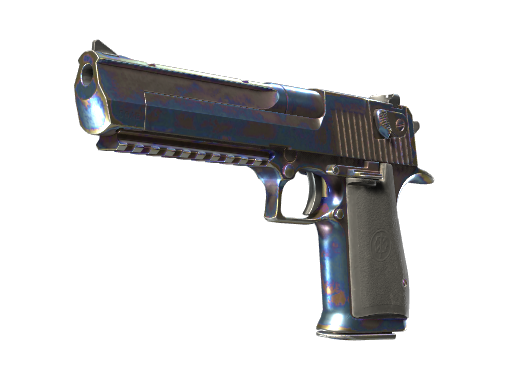
Desert Eagle Heat Treated is a pattern-based finish whose blue, purple and gold areas vary between copies. The finish name alone does not tell you how the play side looks. Inspect the real item, then compare its seed and wear with equivalent listings.
Confirm the finish before comparing patterns
Heat Treated is not the same finish as Case Hardened. Shared color descriptions do not make their seed lists interchangeable. Start by checking the exact item name on the listing.
SlothiW's catalogue records the Heat Treated float range as 0.00 to 1.00. That means this finish can span all five exterior categories. A pattern comparison that ignores wear can group visually very different copies together.
The seed controls the texture placement; float controls the exterior's wear. Neither number is a simple quality rating. A higher seed does not mean more blue, and a lower float does not guarantee your preferred distribution of color.
Inspect the play side, the opposite side, the slide and the other visible surfaces. Decide which area you actually value. A screenshot selected to emphasize one blue patch can hide a different balance elsewhere on the weapon.
Original SlothiW learning diagram. Follow the current game interface for live rules.
Blue Gem, Gold Gem and Purple Gem are descriptions
Collectors use these labels to describe color coverage. They should not be treated as an official Valve certification, and different sellers may apply them to different thresholds.
Before paying more for a label, ask for the seed and a direct inspect link. Reproduce the view in a consistent inspection environment. If a seller's evidence is only a bright promotional render, it is not enough to establish how the actual copy looks.
A copied list of top patterns is especially risky when the list does not explain the weapon side or criteria it ranks. Use it as a shortlist to inspect, not as an automatic price table.
Inspect wear at the same time
Factory New and Battle-Scarred copies can share a seed while showing different visible wear. Match exterior and approximate float before deciding what the pattern premium is.
For an everyday play skin, compare the view you will see during normal use instead of judging only a large inspection render. The most attractive close-up is not necessarily the copy that best fits your loadout or budget.
How to compare real listings
Use the item card for a current starting point, then select your wear on the full item page. A general price shown for the finish is not a valuation of a particular premium seed.
When two copies look similar, keep a simple side-by-side record of inspection images and listing details. This helps you avoid paying more for a difference you cannot consistently identify.
Open the exact Heat Treated item rather than a similarly named finish.
Record the listing's seed, float, exterior and any special variant.
Inspect both sides under the same conditions as other candidates.
Separate the ordinary finish price from any claimed seed premium.
Check listing availability, fees and restrictions before confirming.
Acquisition and market claims
Heat Treated was introduced as an Armory limited-edition reward, but a historical introduction does not prove that the same redemption option is still available. Check the current client catalogue or compare existing market copies.
Do not interpret limited availability as a guaranteed future price. The visual pattern you prefer and the price another buyer will later pay are separate questions.
Quick answers
Does low float guarantee a Blue Gem?
No. Float and texture seed are different properties.
Can I use Case Hardened seed lists?
No. Inspect Heat Treated using data for that finish.
Is the generated cover an exact pattern reference?
No. It illustrates the topic; the actual item card and inspect data are the relevant references.
Checked on 20 October 2026. The cover is an original AI-generated concept illustration; diagrams are original learning aids. Use real item inspections and the current client for exact visuals, rules and availability.